
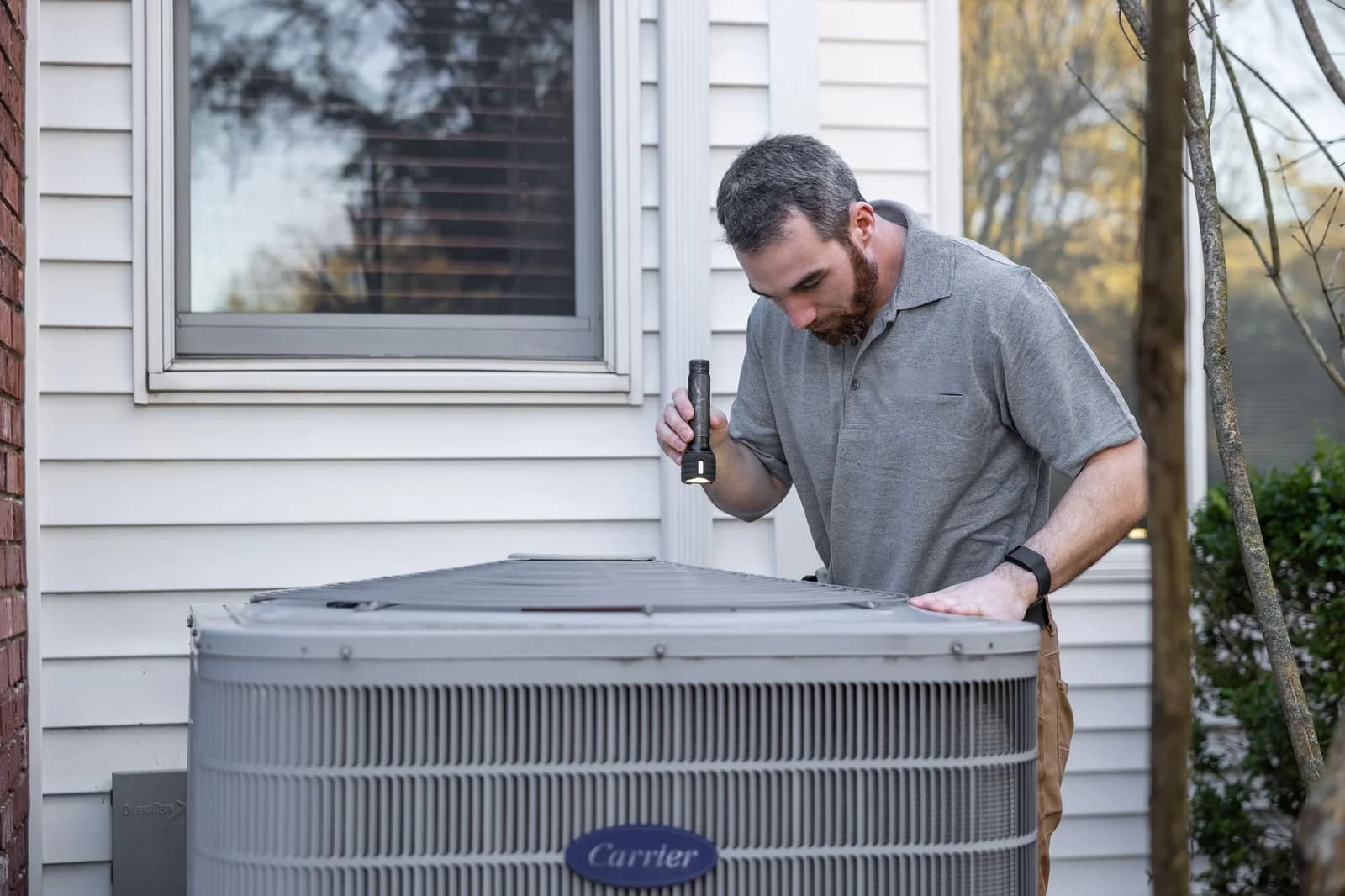
A Leak Is Not a Yes-or-No Repair Decision
Of everything we diagnose on service calls across Santa Monica, refrigerant leaks are the ones homeowners most often assume have a single obvious answer: fix it. In practice, the right call splits into a repair-or-replace decision that depends on where the leak is, how old the system is, and critically, what refrigerant it runs on. Getting this decision right is worth more than the repair itself, because the wrong call in either direction wastes money, either by replacing a system that only needed a targeted fix, or by sinking repair money into a system that was going to need replacing within a year regardless.
Why a System Even Loses Refrigerant in the First Place
Refrigerant operates in a sealed loop between the indoor coil and outdoor condenser and should never need topping off under normal conditions. If a system is low, refrigerant is escaping somewhere, and simply adding more without finding the leak just delays the identical problem at the identical cost, plus whatever additional wear happened in the meantime.
Formicary corrosion creates pinhole leaks in copper lines through a chemical reaction between certain airborne compounds and copper itself, and coastal salt air in Santa Monica and Venice accelerates this compared to drier inland climates.
Factory joint or braze failures can develop slowly over years of thermal expansion and contraction as a system cycles on and off, even when the original manufacturing was sound.
Physical damage happens when line sets running through walls, attics, or exposed exterior runs get nicked during other home repairs, landscaping work, or rodent activity.
Age and vibration simply wear at fittings and connections over years of normal operation, more so in systems original to homes built decades ago.
Reading the Signs Before You Get a Quote
Reduced cooling that shows up as the house "just not getting as cold," ice on the lines or indoor coil, a faint hissing or bubbling near a fitting, a rising utility bill with no clear cause, and oily residue at connections are the signs worth calling in about. None of these tell you which side of the repair-or-replace decision you land on by themselves. That takes an actual diagnostic visit.
The Repair Case
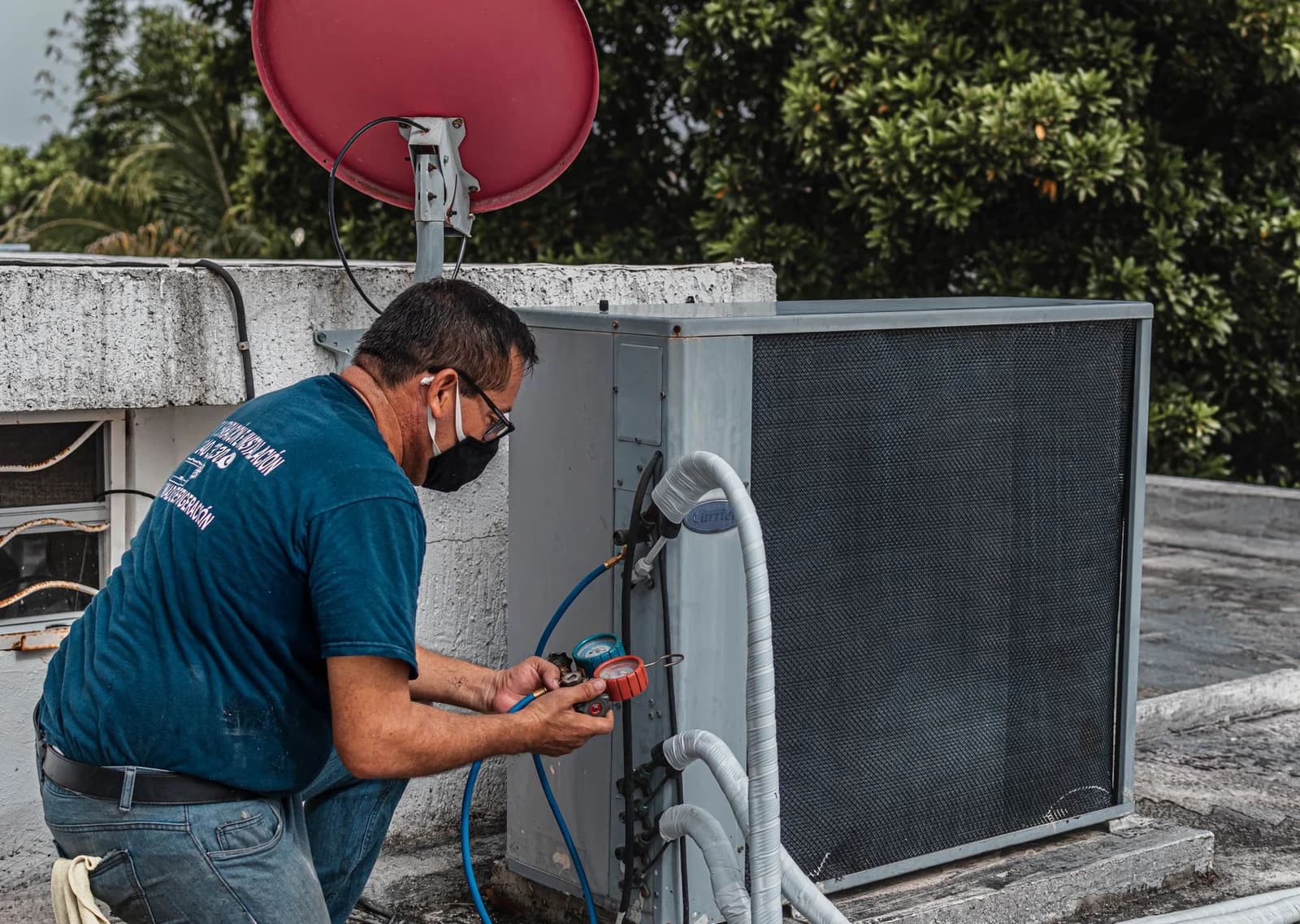
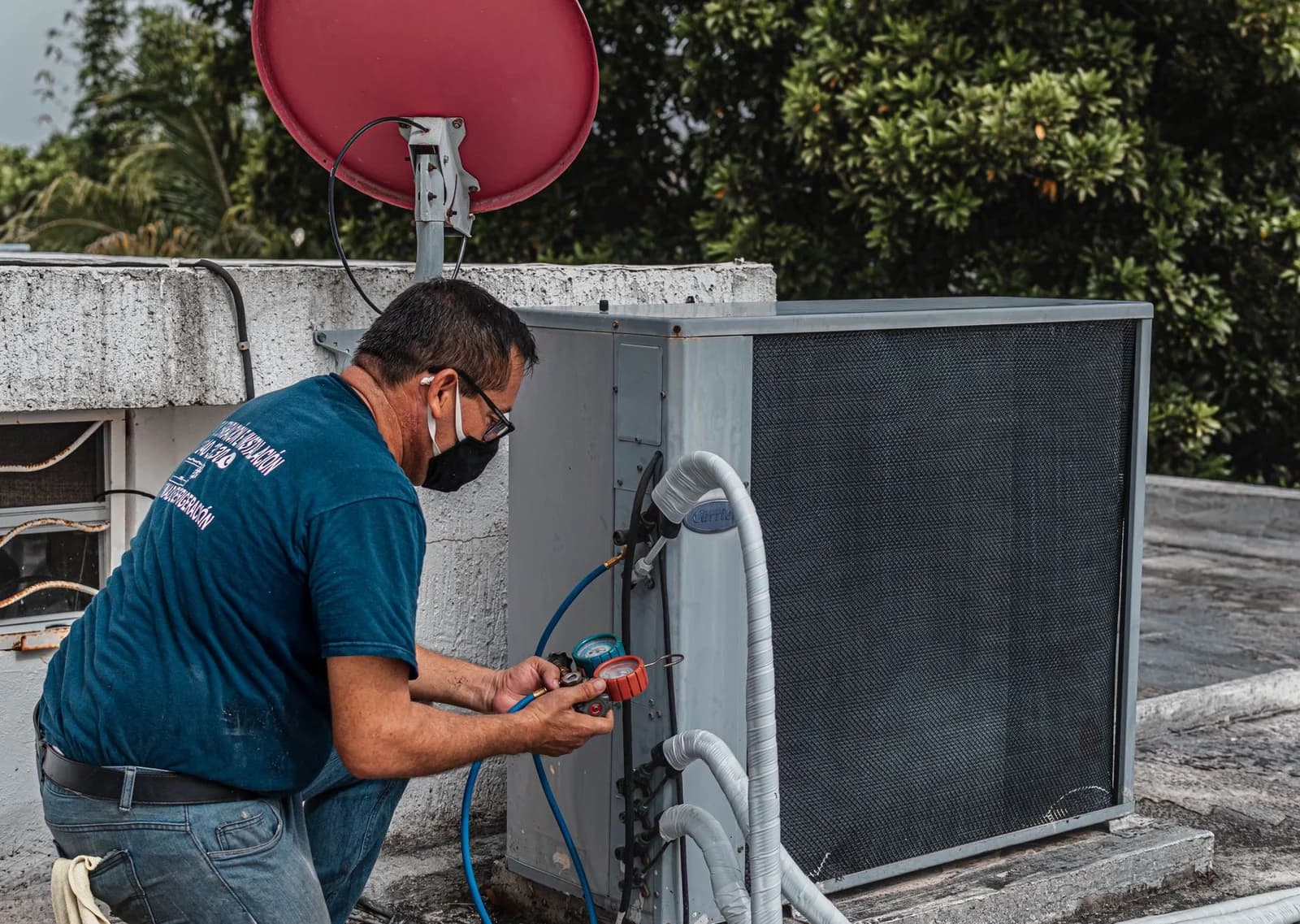
A repair makes financial sense when three things line up: the system runs on a current, readily available refrigerant, the leak is isolated to a single, accessible point rather than showing up in multiple spots, and the system is otherwise in the earlier half of its expected service life. Under those conditions, the process is straightforward. We locate the leak using electronic detection, UV dye testing, or pressure decay testing depending on how elusive it is, repair the specific point, and recharge the system. That is a bounded, predictable cost, and it restores full performance.
The Replace Case
When the System Runs on R-22
This is the single biggest factor tipping the decision toward replacement. Production of R-22 for domestic use has been phased out, which means the remaining supply gets scarcer and more expensive over time. A leak in an R-22 system is rarely just a repair-and-recharge conversation anymore, because sourcing enough refrigerant to service it can cost more than the repair itself, and that cost only rises the longer the system stays in service. For an R-22 system, a leak is frequently the moment that tips the math toward replacing with a system on current refrigerant rather than continuing to feed an aging one an increasingly expensive substance.
When Leaks Keep Recurring
A system that has needed refrigerant more than once in a short window is telling you the leak risk is systemic rather than a single bad fitting, whether from age, corrosion, or a design issue with that particular unit. At that point, each individual repair is cheap, but the pattern of repeated repairs adds up to more than a single replacement would have cost, with none of the benefit of new equipment at the end of it.
When the Leak Coincides With Other Aging Signs
A leak on a system that is also showing weak airflow, a struggling compressor, or corrosion elsewhere is rarely an isolated issue. Repairing the leak alone on a system already showing multiple signs of age tends to just move the next failure a few months down the calendar rather than actually resolving the underlying picture.
Why Topping Off Without Repairing Is the One Option That Never Makes Sense
Federal regulation under the EPA's Section 608 program requires that refrigerant leaks actually get repaired rather than simply topped off once a system crosses certain leak thresholds, and technicians handling refrigerant are required to hold certification under that program specifically because of how it is regulated. Beyond the regulatory angle, topping off without repairing is close to the worst financial outcome available: you pay for refrigerant that will leak out again on a timeline nobody can predict, on top of whatever the eventual real repair or replacement ends up costing.
The Compressor Is What Makes Waiting Expensive
A compressor is engineered to run within a specific refrigerant pressure range. Every cycle it runs on low charge pushes it outside that range, and that kind of strain accumulates rather than reversing itself once the leak eventually gets fixed. A leak caught and repaired promptly rarely touches the compressor at all. A leak that runs for a season before anyone addresses it often does, and compressor replacement is routinely the most expensive single line item on an AC repair bill, expensive enough that it can single-handedly flip the repair-versus-replace math toward replacing the whole system instead.
What Prevention Actually Buys You
An annual refrigerant pressure check catches a slow leak while it is still a repair rather than a replacement decision, which is the entire point of prevention here. Coil coatings and regular rinsing slow the formicary corrosion that leads to pinhole leaks in the first place, particularly relevant for homes in Santa Monica and Venice. Insulating and protecting exposed line sets reduces physical damage risk, and mindful landscaping and pest control around exterior units and buried line runs prevents a meaningful share of the physical-damage leaks we see on service calls.
A Simple Way to Frame the Decision Before the Technician Arrives
It helps to walk into the diagnostic visit with three questions already in mind, since the answers largely determine which side of the decision you land on. What refrigerant does the system actually run on, and is it still in regular production. Has this system needed refrigerant before, or is this the first time. And does the system show any other signs of age beyond the leak itself, weak airflow, unusual noise, a compressor that hesitates on startup. A system that answers all three questions favorably, current refrigerant, first-time leak, no other symptoms, is almost always a repair. A system that answers two or three of them unfavorably is usually signaling that the leak is a symptom of broader wear rather than an isolated event, and that is the pattern where replacement tends to be the more honest recommendation rather than a sales pitch dressed up as one.
If You Think You Have a Leak Right Now
Turn the system off rather than continuing to run it, since continued low-charge operation accelerates the exact compressor wear that turns a repair into a replacement. Call for a diagnostic visit rather than attempting to add refrigerant yourself, both because handling it requires EPA certification and because adding refrigerant without finding the leak solves nothing.
Call Santa Monica AirCon Repair at (877) 409-5247 for a refrigerant diagnostic anywhere in Santa Monica, Pacific Palisades, West LA, Venice, or Brentwood. We will walk you through exactly which side of the repair-or-replace line your system falls on, and why, before you spend money on either path.
Need Professional HVAC Service?
Our HVAC-experienced technicians are ready to help with all your AC and heating needs. Contact Santa Monica AirCon Repair today for expert service throughout the the coastal Westside service area.